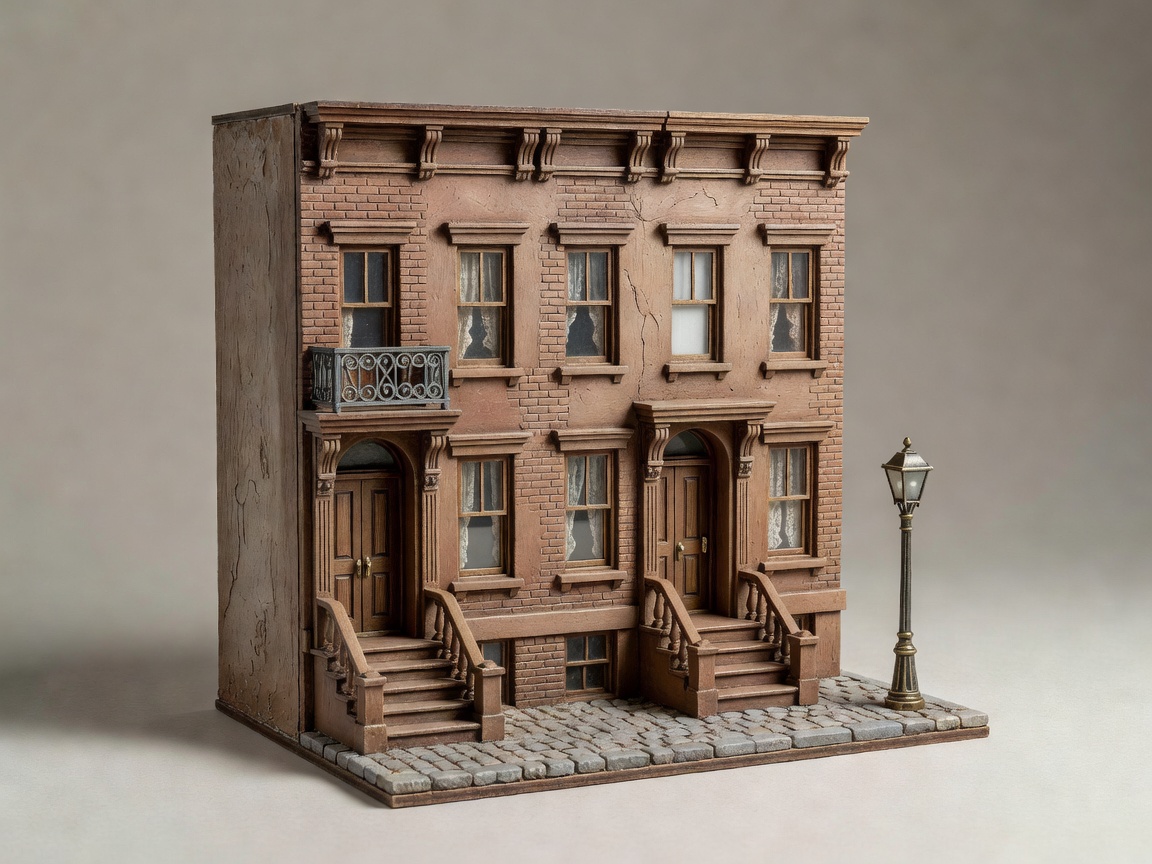
Design from the frame outward
Use the planned camera view to establish what the audience will see. Prioritise visible planes and meaningful silhouettes; details outside the frame should not distract from choices that improve the image.
Discuss the intended scale and perspective with the relevant production departments early. Shared references help the set, camera and lighting teams work toward the same visual target.
Make scale readable
Consistent proportions and carefully selected visual cues can make a small environment feel coherent on camera. Surface finish, depth relationships and the placement of familiar forms all contribute to perceived scale.
Review materials and finishes under the lighting conditions expected for filming. A camera test can reveal reflections, texture or contrast that may not be apparent during construction review.
Plan practical access
Build planning should consider camera position, lighting access, maintenance and the safe movement of authorised crew. Coordinate layout decisions with production leads before the set is committed.
Coordinate the departments
Set design, camera, lighting, effects and safety representatives should share the creative brief and the production constraints. Document agreed revisions so the team can work from a common plan.